You Gotta See What I Found in Fes – This Place Is Unreal
Stepping into Fes, Morocco felt like walking into another century. The moment I checked in, I was hit with the scent of cumin and warm leather, and I knew this wasn’t just a trip—it was a sensory adventure. I didn’t come here for the usual souvenirs; I came for the real deal: handcrafted specialty products made the same way for hundreds of years. What I discovered went way beyond my expectations. From the labyrinthine alleys of the medina to the rhythmic tapping of brass engravers, Fes pulsed with a quiet pride in its traditions. This city doesn’t perform heritage—it lives it. Every tile, every rug, every piece of leather tells a story that has been passed down through generations, untouched by mass production or fleeting trends.
First Impressions: Checking Into the Heart of Fes
Arriving in Fes el-Bali, the ancient walled city and UNESCO World Heritage site, feels like stepping into a living tapestry. Unlike the more tourist-polished streets of Marrakech or the coastal ease of Essaouira, Fes moves at its own pace—one dictated by prayer calls, the clatter of donkey carts, and the quiet concentration of artisans at work. My hotel, a restored riad tucked deep within the medina, required a 15-minute walk from the nearest drop-off point. There were no cars here—just narrow cobblestone alleys winding like veins through centuries-old architecture. As I navigated the maze with my guide, I passed spice stalls spilling mounds of saffron and paprika, children laughing as they balanced loaves of bread on their heads, and elders sipping mint tea in shaded doorways. The air hummed with the sound of distant hammering from metal workshops and the occasional call to prayer echoing from the Kairaouine Mosque.
What struck me most was the seamless blend of daily life and artistry. A woman hung laundry beside a wall tiled in intricate geometric zellige patterns. A baker pulled steaming round bread from a clay oven just steps from a carpet weaver’s open-front studio. There was no separation between home and craft—both coexisted naturally, each enhancing the other. This authenticity sets Fes apart. While other Moroccan cities have adapted for tourism, Fes retains its soul. It doesn’t invite you to observe—it invites you to participate, even if only by watching, listening, and absorbing.
The Soul of Fes: Why Craftsmanship Still Matters
Fes is often called the cultural and spiritual heart of Morocco, and for good reason. Founded in the 8th century, it became a center of Islamic scholarship, trade, and artisanal excellence. The city’s reputation for craftsmanship isn’t a modern marketing claim—it’s rooted in over a thousand years of history. Under the Marinid dynasty in the 13th century, Fes solidified its status as a hub for skilled artisans, drawing influences from Berber, Arab, and Andalusian traditions. Today, those influences live on in every hand-stitched carpet, every painted ceramic, every calligraphic inscription on a brass plate.
What makes Fes unique is that these crafts are not museum pieces—they are still made the same way today. The techniques have been preserved through family lineages and guild systems that date back centuries. In many workshops, a father teaches his son the exact method he learned from his own father, ensuring continuity and integrity. These are not jobs—they are callings. Artisans speak of their work with reverence, not as labor but as a form of devotion. A potter once told me, “My hands shape the clay, but the design comes from my ancestors.”
This living heritage is why craftsmanship still matters. When you buy a handmade lamp or a wool blanket in Fes, you’re not just purchasing an object—you’re supporting a tradition that has survived colonization, industrialization, and globalization. These crafts represent resilience, identity, and cultural pride. They are also deeply sustainable. Materials are locally sourced, production is low-waste, and every piece is made to last. In a world of fast fashion and disposable goods, Fes offers a powerful alternative: beauty born of patience, skill, and intention.
The Tanners’ Quarter: A Must-See (and Must-Smell) Experience
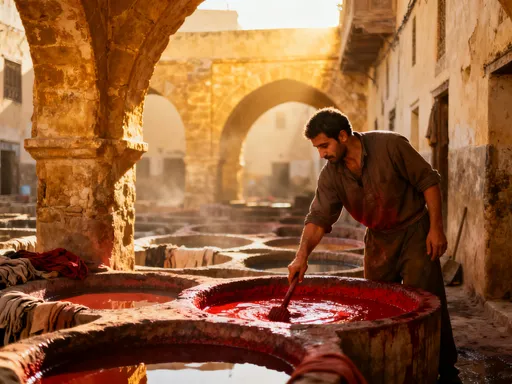
No visit to Fes is complete without a visit to the Chouara Tannery, one of the oldest and largest tanneries in the world. Located in the heart of the medina, it’s a sensory experience unlike any other. From the rooftop of a nearby leather shop, I looked down into a sunken courtyard filled with dozens of stone pits, each bubbling with vibrant natural dyes—indigo, saffron, mint, poppy, and henna. Men in bare feet moved between the vats, stirring hides with long sticks, their movements rhythmic and practiced. The visual effect was mesmerizing: a mosaic of color set against the pale stone and terracotta walls.
But the smell—intense, pungent, unmistakable—was impossible to ignore. The tanning process still relies on pigeon droppings, cow urine, and lime to soften the hides before dyeing. While it’s strong, it’s also part of the authenticity. This method, unchanged for centuries, produces leather of exceptional quality—soft, durable, and richly colored. To help visitors, shop owners hand out sprigs of mint to hold under their noses, a small but thoughtful gesture that softens the experience.
For the best view, visit in the morning when the sun is high and the light floods the pits, making the colors even more vivid. Avoid midday in summer, when the heat amplifies the odor. Wear comfortable shoes—reaching the viewpoint involves climbing narrow stairs—and be prepared to support the local economy. Most viewing points are part of leather shops, and a small purchase is a respectful way to thank the host. Look for bags, belts, or poufs made on-site. These aren’t just souvenirs—they’re proof that ancient techniques can still produce modern luxury.
Handmade Treasures: Ceramics, Textiles, and Metalwork
Beyond leather, Fes is a treasure trove of other crafts, each with its own history and artistry. Zellige tilework, one of Morocco’s most iconic exports, reaches its highest expression here. These hand-cut mosaic tiles are arranged into complex geometric patterns that symbolize the infinite nature of creation. I visited a small studio where artisans spent days chiseling tiny pieces of glazed ceramic, fitting them together like a puzzle before setting them into plaster. A single square meter of zellige can take over a week to complete, and each pattern is unique. These tiles aren’t just decorative—they’re architectural poetry.
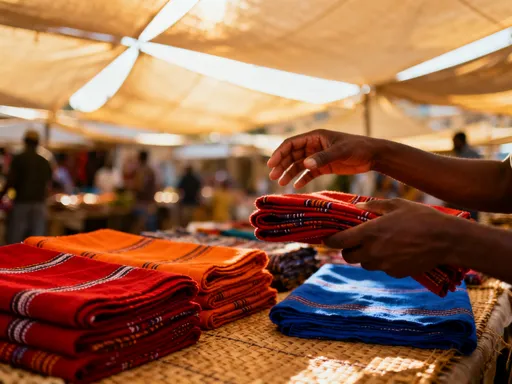
Textiles in Fes are equally impressive. The city is known for its handwoven wool blankets and throws, often dyed with natural pigments and woven on wooden looms passed down through generations. In a quiet workshop near the Bab Bou Jeloud gate, I watched an elderly weaver guide colored threads through the loom with steady hands. Her blanket, still in progress, featured traditional Amazigh (Berber) symbols representing protection, fertility, and harmony. These blankets are warm, durable, and deeply meaningful—perfect for adding texture and soul to any home.
Metalwork is another Fes specialty. Brass and copper lamps, engraved with floral and calligraphic motifs, are a staple of Moroccan decor. I toured a family-run atelier where three brothers worked side by side, one hammering the metal base, another engraving delicate patterns, and the third polishing the finished piece. The sound was constant—a soft, rhythmic tapping that filled the air like a heartbeat. These lamps, when lit, cast intricate shadows on walls, transforming a room into something magical. Buying one isn’t just about decoration; it’s about bringing home a piece of Fes’s quiet, enduring artistry.
From Workshop to Wallet: How to Choose Authentic Pieces
With so many beautiful items on offer, it’s important to know how to identify truly handmade goods. Mass-produced imports from Asia have flooded some markets, often sold as “Moroccan style” but lacking the soul of authentic craftsmanship. The first clue is in the price. If a zellige tile panel or a handwoven rug seems too cheap, it probably is. Genuine handmade items require time, skill, and materials—all of which come at a cost.
Look for imperfections. Handmade means human-made, and slight variations in color, shape, or pattern are signs of authenticity, not flaws. A machine-made tile will be perfectly uniform; a hand-cut one will have subtle differences that give it character. Similarly, a hand-knotted rug will have a slightly uneven fringe and a denser knot count than a machine-made version.
Bargaining is expected in Fes, but it should be respectful. Start by asking the artisan or shopkeeper about the piece—how it was made, how long it took, what materials were used. This not only helps you appreciate the work but also signals that you value their craft. A fair price reflects that value. Avoid shops that pressure you or refuse to explain their products. Instead, seek out cooperatives and family studios that prioritize transparency and fair wages.
Supporting ethical businesses ensures that your purchase benefits the makers, not just middlemen. Look for labels or certifications that indicate fair trade practices, or ask directly about working conditions. When artisans are paid fairly, they can continue their work, train new generations, and preserve their heritage. Your choice as a traveler has real impact.
Hidden Workshops: Going Off the Beaten Path
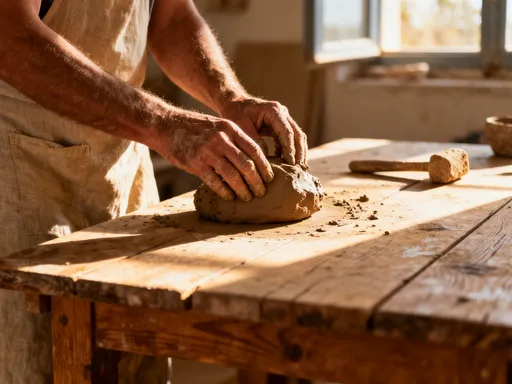
While the main souks and tannery are must-sees, some of the most memorable experiences come from wandering off the tourist trail. One afternoon, I followed a narrow alley away from the bustling dye pits and stumbled upon a small pottery studio tucked behind a courtyard. An elderly potter sat at a wheel, shaping a clay vase with quiet focus. His hands moved with a lifetime of practice, coaxing form from formless earth. He smiled when he saw me, invited me in, and offered tea. We couldn’t speak the same language, but his gestures and expressions said everything.
Another day, I found a carpet weaver in a quiet corner of the medina, her loom set up in a sunlit room overlooking a garden. She showed me how each knot was tied by hand, explaining through a translator that her designs were inspired by her childhood in the Middle Atlas mountains. Her carpets told stories—of rivers, of mountains, of family. Buying from her felt personal, not transactional. These hidden workshops are where the true spirit of Fes lives—not in polished storefronts, but in quiet corners where art is made with love and patience.
Exploring these lesser-known spaces requires curiosity and a willingness to get lost. Ask locals for directions, follow the sound of hammering or weaving, or simply wander with no destination. These encounters often become the most cherished memories—proof that travel isn’t just about seeing places, but about connecting with people and their stories.
Bringing Fes Home: How These Products Enrich Everyday Life
Back home, the items I brought from Fes aren’t just decorations—they’re daily reminders of a place that values slowness, skill, and soul. My hand-painted teacup sits on my kitchen shelf, its blue and green patterns catching the morning light. Every time I use it, I think of the artisan who painted it, stroke by careful stroke. My wool blanket, draped over the sofa, keeps me warm and carries the memory of the weaver’s hands at work. Even the small brass lamp on my desk, with its intricate cutouts, casts shadows that dance like the ones I saw in the medina.
These objects do more than beautify a space—they deepen my connection to the world. They remind me that not everything needs to be fast, cheap, or disposable. They inspire me to be more intentional, to appreciate the process as much as the product. When I serve tea in my Fes cups or wrap myself in the handwoven blanket, I’m not just using an item—I’m honoring a tradition.
Displaying these pieces thoughtfully helps preserve their story. Place a zellige tile in a frame as wall art. Use a leather pouf as a coffee table. Let a brass lamp illuminate your reading nook. Each time someone asks, “Where did you get that?” it’s a chance to share the story of Fes—of the tanners, the weavers, the potters who keep ancient crafts alive. In this way, the journey continues long after the trip ends.
Fes is more than a destination—it’s a living museum of human creativity and resilience. Its streets are not just pathways but corridors of culture, where every turn reveals another layer of history and artistry. To visit Fes is to witness a world where craftsmanship is not a relic but a rhythm, where beauty is made by hand and passed from heart to heart. Travelers who come here seeking more than photos will find something deeper: a connection to people whose lives are woven into their work.
So go beyond sightseeing. Step into a workshop. Ask questions. Listen. Let the colors, scents, and sounds of Fes seep into your senses. Choose a piece not because it’s pretty, but because it carries meaning. Support the artisans who keep centuries-old traditions alive. In doing so, you don’t just take something home—you become part of a story that began long before you arrived and will continue long after you leave. Travel deeper. Craft matters.