You Won’t Believe What Manchester’s Architecture Just Revealed
Manchester isn’t just about music or football—it’s a city where stone, steel, and glass tell stories of revolution, resilience, and reinvention. I walked its streets with no plan, only curiosity, and stumbled upon architectural wonders I never expected. From Victorian titans to futuristic curves, every building feels alive. This is urban design that doesn’t just stand there—it speaks. And honestly? It changed how I see cities forever.
The First Glimpse: Arriving in Manchester with No Expectations
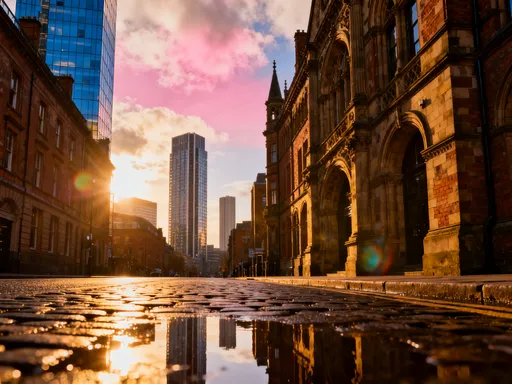
Arriving in Manchester by train offers an immediate architectural overture. As the train slows into Manchester Piccadilly, the station’s sweeping glass canopy glides overhead like a modern shield, protecting travelers beneath while framing views of the city’s evolving skyline. Just beyond, the original 19th-century facade still stands—a dignified blend of red brick and sandstone, its clock tower keeping silent watch over arrivals and departures. This juxtaposition sets the tone: Manchester is a city that honors its past while embracing what comes next. The blend of old and new is not accidental but deeply intentional, reflecting a place where history and progress walk side by side.
At street level, the textures of Manchester begin to unfold. Cobbled side lanes lead to wide, bustling boulevards. The footpaths are lined with cast-iron lampposts, some over a century old, standing guard beside sleek digital signage and bike-sharing stations. The city’s entry points—whether through Victoria Station, with its restored Victorian arches, or via the Spinningfields district—signal a layered identity. At Victoria, recent renovations have brought daylight back into the once-dim concourse, highlighting the original iron trusses and tiled columns. These details don’t just serve function; they tell a story of a city rediscovering its architectural pride.
What strikes first-time visitors is the absence of pretense. Unlike capitals that flaunt their grandeur, Manchester reveals itself gradually. There are no sweeping panoramas from high vantage points, no single iconic tower that dominates the skyline—at least not in the traditional sense. Instead, the city unfolds in fragments: a gargoyle peering from a cornice, a mosaic above a doorway, a sudden courtyard hidden between office blocks. This fragmented beauty rewards slow exploration. It invites you to look closer, to pause, to wonder. And in that act of noticing, you begin to understand Manchester not as a destination but as an experience—one built not just of buildings, but of memory, material, and meaning.
Victorian Powerhouses: Where Industry Built a City
The 19th century forged Manchester into the world’s first industrial city, and its architecture from that era remains a testament to ambition, innovation, and civic confidence. During the height of the Industrial Revolution, Manchester was known as “Cottonopolis,” the beating heart of global textile trade. The wealth generated by cotton fueled a construction boom unlike any other in northern England. What emerged were not just factories and warehouses, but monuments to industry—grand, ornate, and built to last. These structures were more than workplaces; they were declarations of power, prosperity, and progress.
Nowhere is this clearer than in the city’s surviving cotton warehouses, particularly in the Castlefield district. Once the hub of canal-based trade, Castlefield is now a conservation area where red-brick behemoths stand shoulder to shoulder, their facades marked by rows of tall, arched windows and heavy stone lintels. These buildings were engineered for function—thick walls to support heavy machinery, wide internal spans for storage—but their designers did not sacrifice beauty. Carved stonework, decorative cornices, and iron-railed balconies speak to a pride in craftsmanship that industrial might alone could not explain. Today, many have been repurposed as apartments, restaurants, and offices, their original character carefully preserved.
The Royal Exchange, located in the city center, offers another powerful example of Victorian ambition. Originally built as a commodities exchange where cotton prices were set daily, the building has been rebuilt twice after fires, each time rising more grandly than before. The current structure, completed in 1874, features a vast trading hall topped with a glass dome—once the largest in the world. The interior, with its marble columns and gilded detailing, was designed to impress. It conveyed the seriousness and scale of Manchester’s role in global commerce. Though the exchange closed in 1968, the building lives on as a theater and performance space, its echoing halls now filled with applause rather than auction calls.
These industrial-era landmarks are not relics but active participants in the city’s present. Their preservation reflects a broader commitment to adaptive reuse—a philosophy that values history not as something to be preserved behind glass, but as a foundation for modern life. Walking through these spaces, one senses the weight of the past, not as a burden, but as a source of strength. Manchester’s Victorian architecture reminds us that cities are not just shaped by economics, but by the values of those who build them—values like endurance, pride, and a belief in progress.
Gothic Dreams and Civic Pride: The Manchester Town Hall Experience
Standing at the heart of Albert Square, the Manchester Town Hall is more than a government building—it is a cathedral of civic life. Designed by architect Alfred Waterhouse and completed in 1877, its neo-Gothic silhouette dominates the city center with turrets, spires, and a 280-foot clock tower that rivals even Big Ben in grandeur. The exterior, carved from striking red sandstone, glows in the northern light, its surface alive with sculpted figures, floral motifs, and symbolic beasts. Each detail was chosen with purpose, reflecting Manchester’s identity as a city built on industry, democracy, and community.
But it is inside where the Town Hall truly astonishes. Step through the heavy oak doors, and you enter a world of mosaic floors, stained-glass windows, and vaulted ceilings. The Great Hall, once the seat of the city council, is a masterpiece of Victorian design. Its walls are lined with murals by Ford Madox Brown depicting the history of Manchester—from Roman settlement to industrial triumph. The acoustics are remarkable; a whisper at one end can be heard clearly at the other, a feature said to have been designed so that no citizen’s voice would go unheard. This is architecture as ideology: a physical manifestation of transparency, dignity, and public service.
Visitors on guided tours often describe a sense of awe, not just at the scale, but at the intentionality behind every element. The staircase, wide and ceremonial, was built to accommodate processions and public gatherings. The stained-glass windows, depicting saints and civic leaders, blend religious tradition with municipal pride. Even the door handles and light fixtures bear intricate designs, proof that no detail was too small to be meaningful. During recent restoration work, conservators uncovered original paint colors and gilding that had been hidden for decades, revealing a vibrancy that had long been muted by time and grime.
The Town Hall is not frozen in the past. While closed for extensive renovations from 2018 to 2024, the city ensured its legacy remained visible through exhibitions, digital tours, and temporary installations. Its reopening was celebrated as a civic milestone, a reminder that public spaces matter. Today, it continues to host weddings, citizenship ceremonies, and public debates—functions that keep it alive as a place of community, not just history. To stand within its halls is to feel connected to generations of Mancunians who believed in the power of collective action. The building does not merely house government—it embodies it.
From Mills to Lofts: Adaptive Reuse That Defines a Vibe
One of Manchester’s most compelling architectural narratives is not about preservation, but transformation. Across the city, former mills, warehouses, and factories have been reborn as homes, hotels, galleries, and workspaces. This practice of adaptive reuse has become a defining feature of Manchester’s urban character, allowing the city to grow without losing its soul. Rather than demolishing the past, Manchester has chosen to reinterpret it, proving that old buildings can meet modern needs without sacrificing authenticity.
In the Northern Quarter, once a hub for textile storage and light industry, rows of 19th-century warehouses now house independent boutiques, vinyl shops, and cozy cafes. Their thick brick walls and timber floors provide natural insulation and charm, while large windows flood interiors with light. Many have been converted into loft apartments, where exposed beams, original fireplaces, and industrial-style fixtures celebrate the building’s history. These conversions are not superficial; they require careful engineering to meet safety, insulation, and accessibility standards while maintaining historic integrity. The result is living spaces that feel rooted, personal, and full of character.
Further afield, the Museum of Science and Industry (MOSI), located in the former Liverpool Road Station and adjacent mill buildings, exemplifies how industrial heritage can become educational and cultural infrastructure. Set within a restored 1830s railway warehouse—the oldest surviving passenger station in the world—the museum tells the story of innovation through interactive exhibits on textiles, energy, and computing. The site itself is part of the exhibit: visitors walk across original cobbled yards, peer into restored steam engines, and stand beneath iron-truss roofs that once sheltered freight and locomotives. It is a powerful reminder that Manchester’s past is not something to be explained from afar, but experienced up close.
Even hotels have embraced this ethos. The Stock Exchange Hotel, once the home of the Manchester Stock Exchange, now offers luxury accommodations within a meticulously restored Beaux-Arts building. Original banking halls have become dining rooms, and former offices have been transformed into suites with views of the city skyline. The building’s grand staircase and marble columns remain untouched, serving as a bridge between eras. These conversions do more than repurpose space—they create continuity. They allow new generations to live, work, and play within the physical legacy of those who came before, fostering a deeper connection to place.
Modern Statements: Glass, Steel, and the Future
While Manchester honors its past, it does not live in it. The city’s skyline continues to evolve, marked by bold contemporary structures that reflect its ongoing reinvention. Among the most striking is the Beetham Tower, a 47-story skyscraper in the city center that, upon completion in 2006, became the tallest building in the UK outside London. Its sleek glass façade and distinctive overhang—resembling a knife edge—create a dramatic silhouette against the more traditional skyline. Love it or hate it, the Beetham Tower signals Manchester’s confidence in its future.
Other modern additions demonstrate a more thoughtful integration with the urban fabric. HOME, a cultural center opened in 2015, combines cinema, theater, and gallery spaces in a design of angular glass and pale brick. Its open atrium and wide staircases invite the public in, blurring the line between indoor and outdoor, art and everyday life. The building’s transparency is both literal and symbolic—reflecting a commitment to accessibility and inclusion in the arts. Similarly, the University of Manchester has invested heavily in state-of-the-art facilities, such as the Jeanie Lambie Building and the Manchester Engineering Campus Development (MECD), which feature sustainable design, flexible workspaces, and cutting-edge laboratories.
Public reaction to these new structures has been mixed, as is often the case with architectural innovation. Some residents feel that glass towers disrupt the human scale of the city, while others welcome the energy and economic activity they bring. Yet even the most controversial designs have sparked important conversations about identity, density, and sustainability. Rather than erase history, many contemporary buildings engage in dialogue with it—positioning glass boxes beside brick warehouses, or placing minimalist facades across from ornate town halls. This contrast is not always harmonious, but it is honest. It reflects a city that is still writing its story, one project at a time.
What unites these modern interventions is a shared belief in progress—not as a rejection of the past, but as an extension of it. Manchester’s industrial legacy was built on innovation; today’s architecture continues that tradition. From energy-efficient cladding to smart building systems, new constructions are designed with sustainability and functionality in mind. They are not just statements of style, but responses to real-world challenges like urbanization, climate change, and the need for flexible living and working environments.
Hidden Layers: Architectural Details Most People Miss
While grand buildings capture attention, Manchester’s true architectural magic often lies in the details—small, easily overlooked elements that reveal craftsmanship, humor, and local identity. These hidden layers reward the curious observer and transform a casual walk into a treasure hunt of discovery. A closer look at street corners, alleyways, and building facades uncovers a city rich in narrative and nuance.
Take, for instance, the carved grotesques that peer down from cornices and gables. Unlike the solemn gargoyles of cathedrals, many of Manchester’s stone creatures are whimsical—a grinning dog, a sleeping worker, a musician with a fiddle. These figures, often added by stonemasons with a sense of humor, reflect the city’s down-to-earth character. In the Town Hall alone, over 100 sculpted heads represent real people from Manchester’s history, including factory workers, politicians, and artists. Spotting them becomes a game, a way of connecting with the individuals who shaped the city.
Equally captivating are the decorative ironworks—wrought-iron balconies, gateways, and railings that adorn buildings in Ancoats and Chorlton. Many feature repeating patterns inspired by industrial motifs: interlocking gears, cotton bolls, and even steam pistons. These designs are not merely ornamental; they are symbols of pride in the city’s manufacturing roots. Similarly, patterned paving stones in public squares often incorporate the Manchester bee, the city’s historic emblem of industry and community. These small touches create a sense of continuity and belonging, reminding residents and visitors alike that they are walking through a place with a distinct identity.
Hidden courtyards and mews, tucked between larger buildings, offer another layer of intimacy. In the Northern Quarter, for example, passages like Tib Street Mews and Churchgate House open into quiet, cobbled spaces where ivy climbs brick walls and café tables spill into the open air. These micro-environments provide breathing room in a dense urban landscape, proving that even in a city of grand gestures, there is room for quiet beauty. For the attentive traveler, these details transform architecture from a visual experience into a sensory one—felt in the texture of stone, heard in the echo of footsteps on tile, seen in the play of light on carved surfaces.
Walking the City: A Tour That Connects Past, Present, and Future
To truly understand Manchester’s architectural story, one must walk it. A well-paced, five-hour walking tour can connect key landmarks across the city center, offering a chronological and spatial journey through time. Begin at Manchester Victoria Station, where restored Victorian architecture meets modern transit design. From there, head south through the Northern Quarter, pausing at converted warehouses and street art murals that reflect the area’s creative spirit. Continue to Albert Square, where the Town Hall stands in conversation with modern office blocks and the Midland Hotel’s Edwardian elegance.
Next, descend into Castlefield, where Roman ruins, industrial canals, and repurposed mills create a layered historical landscape. Cross the iron footbridge for a view of the Roman fort and the modern Science and Industry Museum. From here, walk east along Deansgate, where glass towers like the Beetham rise beside 19th-century churches and banking halls. Stop at Spinningfields for coffee in a courtyard surrounded by contemporary architecture, then loop back through St. Ann’s Square, noting the blend of Georgian symmetry and modern retail.
Time the walk to end at golden hour, when the red sandstone of the Town Hall glows warmly and glass facades reflect the evening sky. This is the ideal moment for photography—light catches carved details, windows mirror the clouds, and the city feels both alive and reflective. Carry a small notebook or use a phone camera to capture details: a pattern in the pavement, a weathered inscription, a shadow across a wall. These moments, fleeting and personal, become part of your own story of Manchester.
Throughout the walk, take breaks at local cafes—perhaps a slice of cake at Mackie Mayor, housed in a restored Victorian market hall, or a flat white at a small roastery in Ancoats. These pauses are not just for rest; they allow time to absorb what you’ve seen, to reflect on the city’s rhythm. This tour is not about ticking off landmarks, but about feeling the pulse of a place that has rebuilt itself again and again. It is accessible to all—no special knowledge required, just curiosity and comfortable shoes.
Manchester’s architecture isn’t about isolated monuments—it’s a continuous conversation across centuries. Each style, material, and street layout adds a voice to a story of innovation and endurance. By walking its blocks with awareness, we don’t just see buildings—we connect with the spirit of a city that never stopped rebuilding itself. And that’s worth experiencing, one stone at a time.